Colour-Coded Cleaning Cloths: Which Colour Goes Where?
By the CleaningCrews Perth team · Updated 3 Nov 2026 · 2 min read
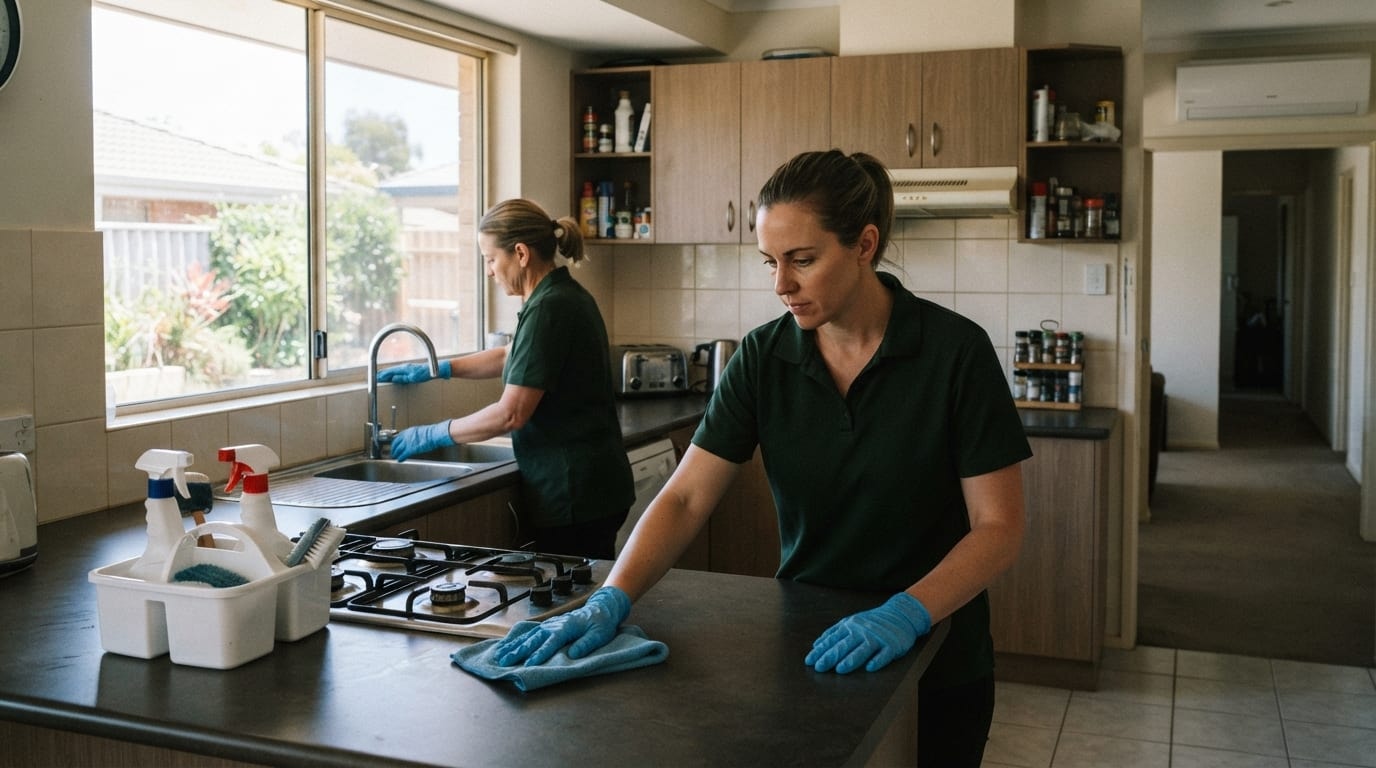
Colour coding means using a different colour of cloth, mop and bucket for each type of area, so the cloth used on a toilet never touches a kitchen bench. A common system is red for toilets, yellow for bathroom surfaces, blue for general areas and green for kitchens and food areas.
Cross-contamination is one of the biggest hygiene risks in cleaning. Colour coding is a simple, cheap way to manage it. Anyone can see at a glance which cloth belongs where.
A common colour system
| Colour | Use it for | Never use it on |
|---|---|---|
| Red | Toilets, urinals and toilet floors | Anything else |
| Yellow | Washbasins, bathroom surfaces, taps and mirrors | Kitchens and food areas |
| Blue | General surfaces such as desks, doors, offices and reception | Toilets and food areas |
| Green | Kitchens, kitchenettes and food areas | Toilets and bathrooms |
Rules that make it work
- Use the same colour for the cloth, mop, bucket and gloves in each area.
- Never switch colours halfway through a clean.
- Wash cloths by colour, hot, and dry them fully between uses.
- Replace worn or smelly cloths. A tired cloth spreads dirt rather than removing it.
- Store each colour separately and label the storage.
- Train everyone, including new and casual staff.
Why microfibre?
Microfibre traps dust and bacteria in its fibres instead of pushing them around, and it often needs less chemical. It can be washed and reused many times, which saves money and waste. Avoid fabric softener, which clogs the fibres.
Putting it on your checklist
Add the colour code to your site checklist and your scope of work. Our free Office Cleaning Checklist is a good starting point, and our Chemical Safety and PPE Checklist covers gloves and product handling.
Our commercial crews work to a system like this on every site. Ask for an office cleaning quote.
Frequently asked questions
There is no single national rule for every workplace. Most businesses adopt the common four-colour system, and some industries set their own requirements.
After each use, or at least at the end of each shift, in hot water. Replace them when they stay damp, smell or stop picking up dirt.
Not between toilets and other areas. Use a separate, colour-coded mop head for toilets, and wash mop heads regularly.
It is a good habit, especially for toilet and kitchen cloths, even if you only use two colours.
Looking for a commercial clean?
Tell us about your workplace and we will prepare a quote.
Request a commercial quoteKeep reading
- Business and officeOffice Cleaning Scope of Work: What to Include (Free Template)Read the guide →
- Business and officeAirbnb Turnover Cleaning Checklist for Perth HostsRead the guide →
- Stains and surfacesHow to Remove Red Wine, Coffee, Grease and Other Common StainsRead the guide →
Free cleaning checklists and resources
Printable PDFs for homes, rentals, offices and cleaners. No sign-up needed.